
Connecting Niger's health information systems with Data.FI
The Problem
Across Niger, health data has long lived in silos. Laboratory results, community health records, and national reporting systems operated independently, with no easy, automated way for information to move between them. Health workers and program staff were left entering the same data by hand, more than once, into more than one system.
Closing that gap called for more than automation. It called for something the Ministry's own team could run day to day without depending on outside support: a system built for people to actually use, not just a pipe for data to pass through.
Following a Discovery phase with Niger's Ministry of Public Health, three priority systems were identified as central to closing this gap:
- STELab, the country's laboratory information management system
- CommCare/eCHIS, the community health information system used by community health workers
- OpenClinic, a hospital-level clinical data system
All three priority systems were intended to connect to DHIS2, Niger's national health data repository used for reporting and analytics. This phase of the project focused on establishing interoperability between STELab, CommCare, and DHIS2, with OpenClinic planned for a future phase of integration.
Before this project, CommCare data was entered into DHIS2 directly by hand, while STELab had its own direct integration with DHIS2, one that still required significant manual effort and ongoing support from the STELab team for every transfer. Either way, the result was the same: duplicate work, greater risk of data quality issues, and delays in getting information to the program managers who depend on it for timely decisions.
The Data.FI program, funded by the U.S. Government (USG) and implemented by Palladium, brought OpenFn in to automate these data flows and to demonstrate the value of interoperability in a francophone, low- and middle-income country government context.
Government Leadership and Digital Health Maturity
This was not a project introduced into a blank institutional environment. Niger's Directorate of Digital Health (De-S) entered the engagement with an established national mandate for digital health, a clear sovereignty-first vision, Ministry-managed infrastructure, and an expanding portfolio of national platforms. Its priority was not to create another standalone application, but to make existing systems work together under government governance and technical ownership.
De-S played a central role throughout the engagement: it helped define the interoperability priorities, convened the relevant system owners, aligned the work with DHIS2 and the national digital health architecture, mobilized Ministry developers and administrators, coordinated local hosting, and participated in technical validation, testing, documentation, and handover. Data.FI and OpenFn therefore acted as specialized technical partners within a Ministry-led implementation model, rather than as owners of the national architecture.
This reflects a broader institutional maturity. During the same period, De-S led the consolidation of Niger's costed eHealth Roadmap 2025–2029, organizing 27 priority projects across seven strategic axes, with interoperability, national hosting, and workforce capacity treated as common foundations for the country's digital health ecosystem. The OpenFn implementation was one concrete piece of that larger vision: proof that interoperability can be governed as a shared national service, coordinating policy, architecture, infrastructure, system owners, and partners around a single national objective, rather than delivered as one-off, disconnected projects.
The Solution
OpenFn, working with De-S and the national system owners, designed and built the automated workflows that would move data where it was needed, without manual re-entry. The Directorate provided the institutional and architectural direction for how each exchange should fit into the national health information system (HIS), while OpenFn contributed the workflow automation expertise, a division of roles that helped ensure the integrations addressed real Ministry priorities and could be sustained by national teams:
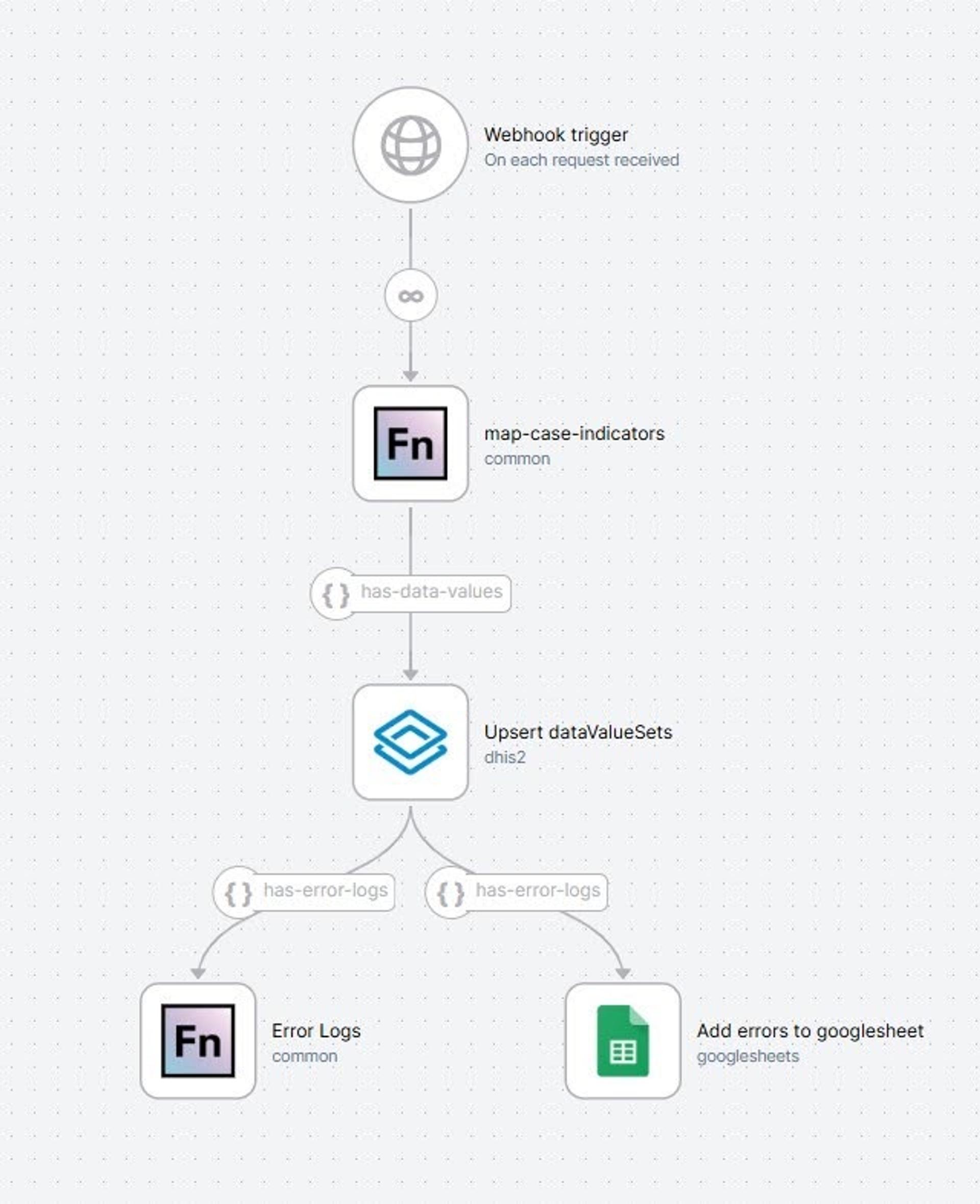
- WF0 (Collections) established a new data staging and orchestration pattern within the platform, laying the technical foundation for the workflows that followed.
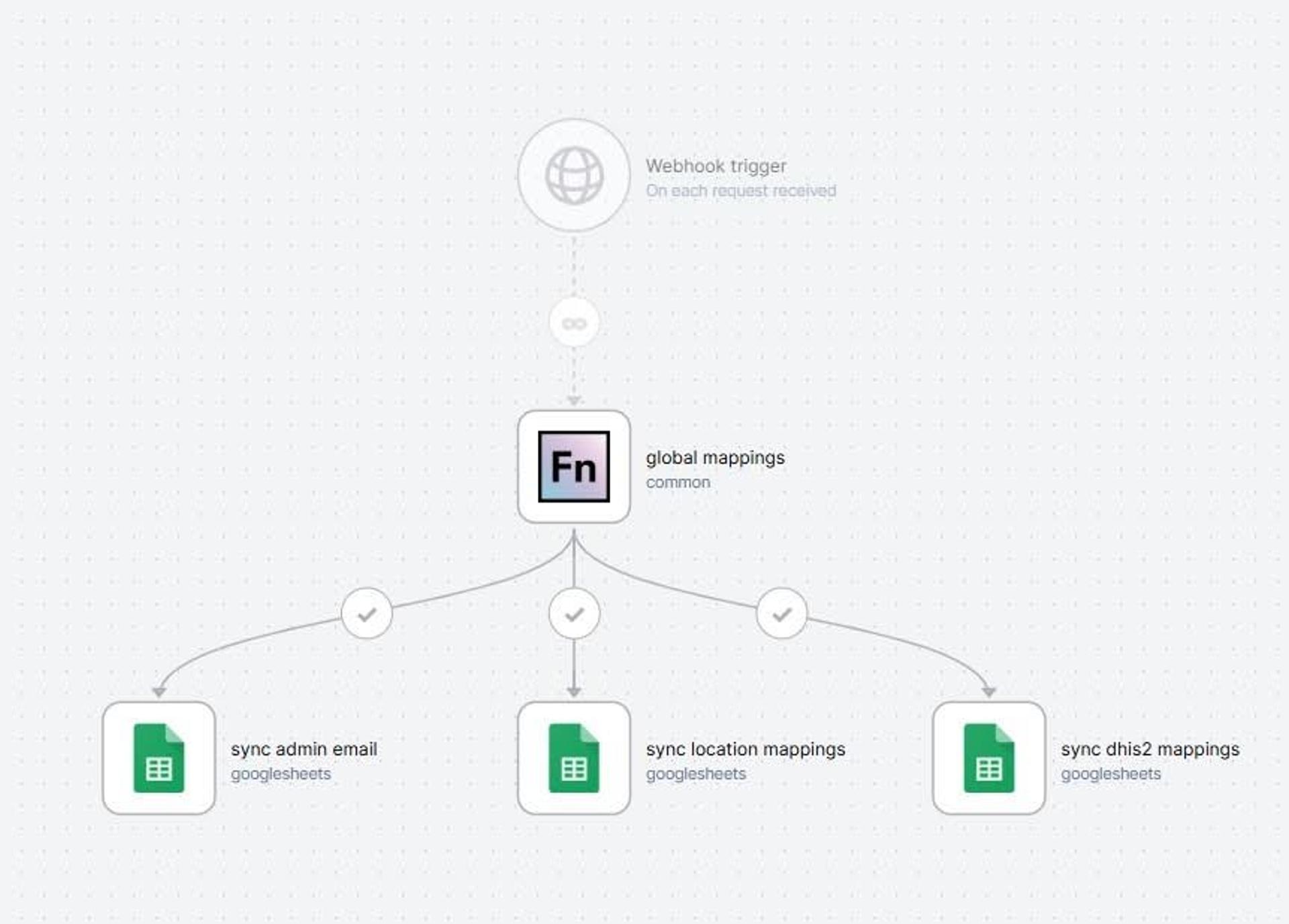
- WF1 (STELab → DHIS2) automates the flow of laboratory result data from STELab into DHIS2. This workflow is complete and operational. This was the most technically demanding of the three workflows, largely because of instability in the STELab API, which remained the primary technical challenge throughout the engagement.
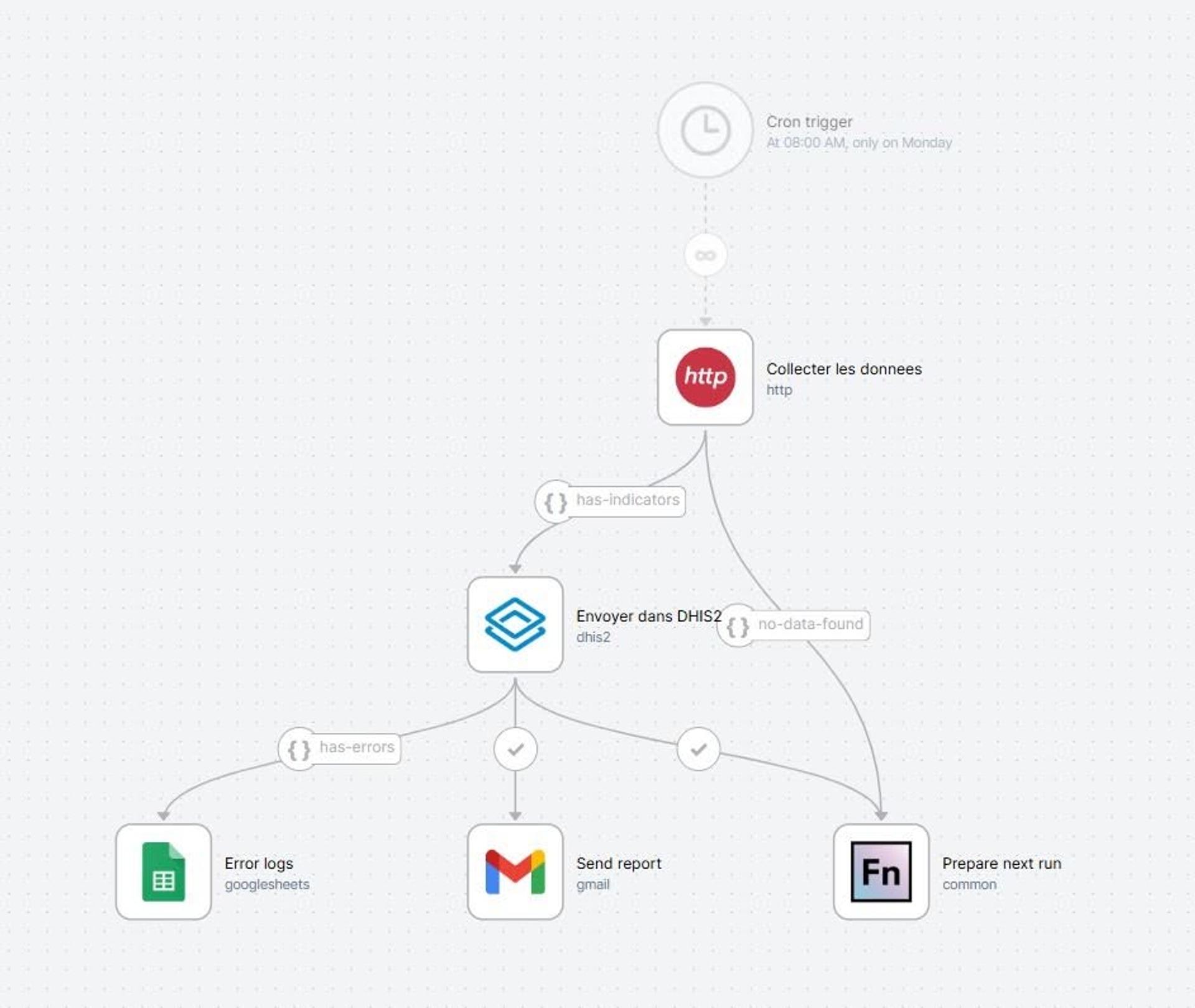
- WF2 (CommCare/eCHIS → DHIS2) automates the flow of community health data collected by community health workers into DHIS2, so that facility and community-level data can be reported consistently. This workflow is also complete and operational.
Built for Local Ownership
Government ownership was not simply a delivery principle applied by Data.FI; it was a strategic requirement led by Niger's Directorate of Digital Health (De-S) from the start. OpenFn was deployed on a server managed by the Ministry of Public Health in Niamey, rather than on cloud infrastructure. Keeping the platform on nationally managed infrastructure is a deliberate, sovereignty-first approach: it keeps sensitive health data within the country's own systems and ensures the Ministry, not an external party, owns the platform going forward.
Local deployment took real infrastructure work, carried out in close partnership with the Ministry’s IT team.
Capacity building was central to the De-S strategy for the engagement. A series of training sessions was delivered remotely to the Ministry’s team in May 2026, covering platform deployment, administration, workflow design, change management, and quality assurance.
The Directorate deliberately used the implementation as a hands-on institutional learning process. In the May 2026 capacity-transfer sessions, De-S staff worked on local deployment, platform administration, users and roles, environment configuration, workflow configuration, testing, monitoring, troubleshooting, and handover. This moved the Ministry beyond being a beneficiary of an integration project toward being able to operate and extend the interoperability layer itself.
Local ownership also shaped the operational decisions around the project. Hosting inside the Ministry's infrastructure, maintaining administrator capability within De-S, documenting workflows and configurations, and planning for backup, support, security, and future expansion were treated as core requirements. The Directorate's objective was to protect national investments and reduce long-term dependence on external vendors for day-to-day operation.
The Impact / Looking Ahead
For the Ministry - and particularly for De-S, which led the national digital health and interoperability agenda - this project's significance goes beyond the three workflows themselves. The implementation of this first-ever national interoperability layer provides a concrete first step to the challenge of siloed health information systems. It also provides a shared foundation for a more coherent, secure, and nationally owned digital health ecosystem.
Leadership Testimonial
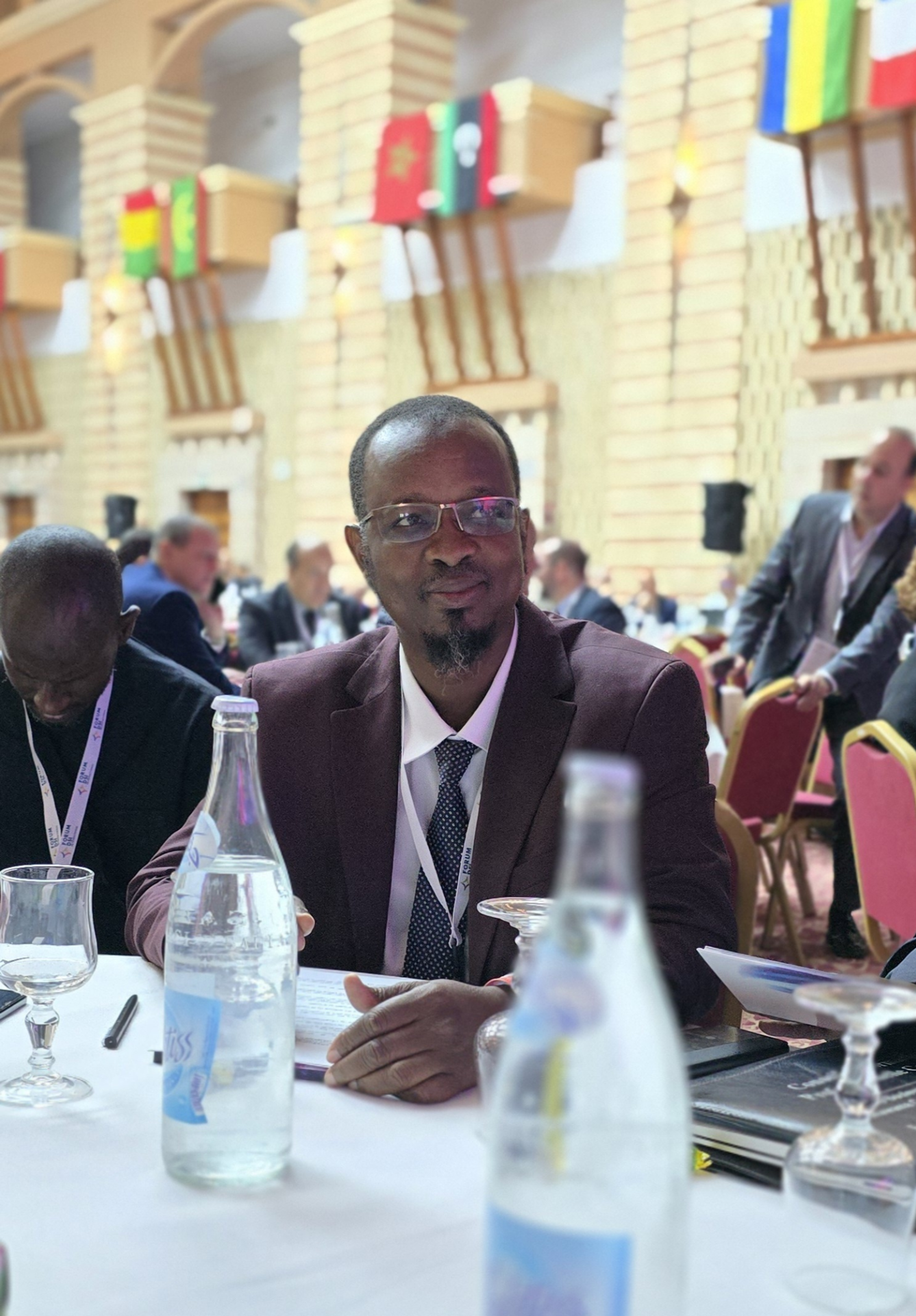
The following testimony captures the Directorate's perspective on the strategic importance of the initiative and the role of government leadership in turning interoperability from a concept into an operational national capability:
“This is a first for our country. Over the years, many partners have spoken about interoperability, but we had never seen a practical demonstration of what it could achieve. When we started this initiative, many people doubted it would succeed. Today, the Ministry of Health's Digital Health Department is the first government department in Niger to demonstrate that multiple information systems can be successfully interconnected using OpenFn, with the valuable support of our partner, DataFI. We are now preparing to share this experience with other ministries so they can learn from our approach and replicate this success.”
Conclusion
Niger's health system holds the same information it always has. What has changed is how easily that information now moves. Lab results, community health data, and national reporting no longer depend on someone re-entering the same numbers into a second, or third, system.
That shift matters beyond this one deployment, too. As the Ministry's Digital Health Department put it above, this is the first time multiple information systems in Niger have been successfully interconnected, and the Ministry is already preparing to share that experience with other departments so it can be replicated elsewhere in government.
It reinforces a principle shared by De-S, Data.FI, and OpenFn: the platform doing this work should belong to the government using it, not to an outside vendor. With OpenFn running on Ministry-managed infrastructure in Niamey, and with Ministry staff trained to administer and extend it themselves, Niger is positioned to keep building on this foundation long after the project itself has ended.
If your organization is working on health system interoperability and thinking about workflow automation, or view our list of partners to work with.
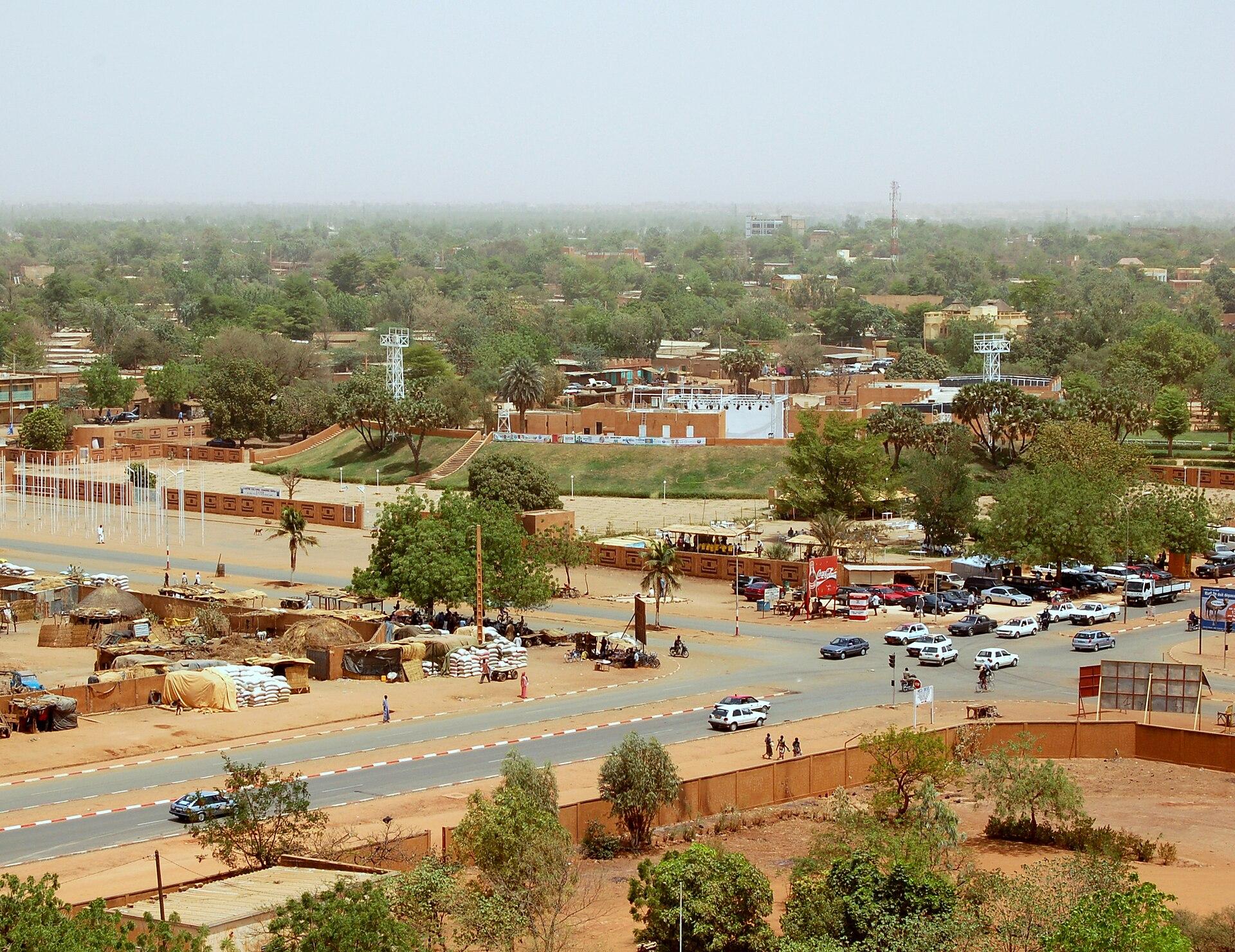
Cover image: Niamey, Niger, by Roland Huziaker.


Written by
Catherine Maurel-Sieberhagen and Ichaou Ibrahim Maman Aminou